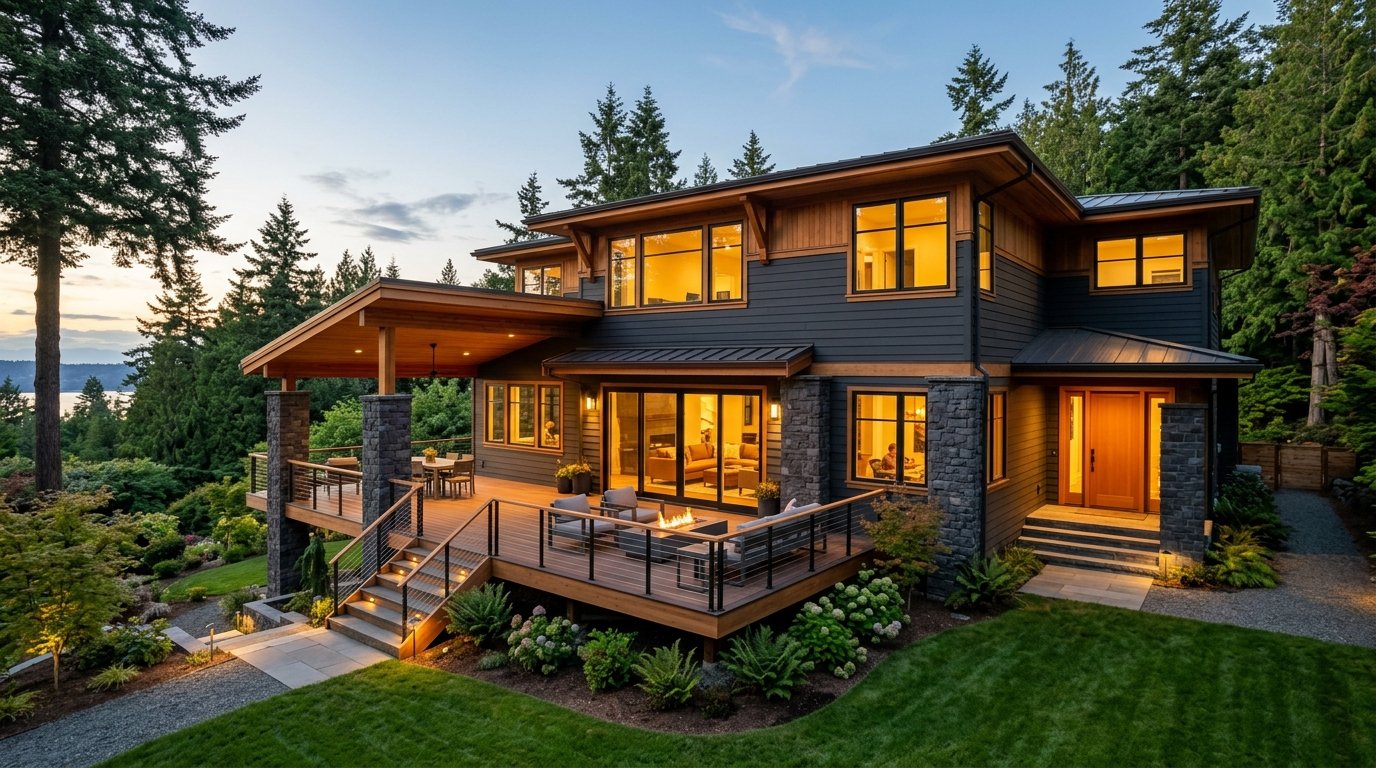
When Greater Seattle homeowners plan a deck replacement, one of the first decisions is whether to build with classic Western Red Cedar or low-maintenance capped composite decking. Both materials perform well when framed and fastened properly, but they behave very differently over ten years of Pacific Northwest rain and shade.
Western Red Cedar is a regional favorite for a reason. It offers authentic wood grain, natural resistance to insects and decay compared to untreated pine, stays cooler underfoot on sunny August afternoons, and has a lower initial material cost. However, cedar does need periodic cleaning to clear moss and a quality penetrating stain or sealer every two to three years to keep it looking rich instead of weathering silver-gray.
Modern capped composite decking solves the maintenance headache. A durable polymer shell wraps the board to resist moisture absorption, splintering, warping, and fading. You never need to sand or stain it—usually a gentle seasonal wash with soapy water is enough to clear pollen and autumn leaves.
Keep two construction details in mind regardless of the surface board you choose: First, the framing underneath matters just as much as the top boards. Using ground-contact rated joists, proper ledger flashing against the house, and butyl joist tape dramatically extends structural life. Second, composite boards expand slightly with temperature changes and require tighter joist spacing (often 12 to 16 inches on center) and hidden fasteners designed for the specific board profile.
If you love the look and scent of real wood and don't mind occasional staining, Western Red Cedar is hard to beat. If you want a deck you can enjoy year after year with minimal upkeep—especially in shaded, tree-lined Bellevue, Kirkland, or Sammamish yards—capped composite is well worth the upfront investment.